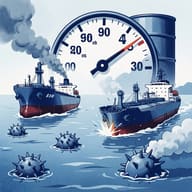
0902 | Oil, Yields, and a $17 Billion Exit: Markets in Motion
Show notes
From a widening US-Iran conflict pushing oil toward $90 and Treasury yields to multi-year highs, to KKR's $3.3 billion payday, the Angels' record sale, and the AI buildout hitting local resistance — a tour of the deals, data, and decisions moving markets today.
Timeline
- 00:00:04 Opening
- 00:00:43 Mideast Conflict Sends Oil Soaring
- 00:04:16 Yields Surge as Fed and Jobs Data Pull Apart
- 00:06:36 AI Boom Meets Data Center Backlash
- 00:08:49 Deal Frenzy: KKR's Windfall, Anthropic's Shadow, Elliott's Telekom Play
- 00:11:18 Sports Billions and Corporate Shake-Ups
- 00:13:32 Climate, Care, and Working Life
- 00:15:00 Closing
Related links
- S&P 500 Rises to Snap Three-Day Skid as Oil Prices Halt Advance
- Stock Market Today: Dow Up On Surprise Jobs Data; Dell Tries To Break Out (Live Coverage)
- Jim Cramer's top 10 things to watch in the stock market Wednesday
- U.S. crude near $90 as Iran retaliates with strikes on Kuwait, Jordan and Bahrain
- Iran says two tankers have hit Hormuz naval mines. U.S. disputes claim
- US and Iran Renew Fighting, Global Bond Rout Deepens
- Energy Secretary Chris Wright tells CNBC more than 17 million barrels of oil transited Hormuz on Monday
- Trump floats renaming Strait of Hormuz the 'Trump Strait'
- US-Iran Clashes Hit Stocks as Oil Rises | Bloomberg Brief 09/02/2026
- 10-year U.S. Treasury yield hits highest level since November 2023
- ¿En qué consiste el “mayor acuerdo petrolero” entre EE.UU. y Venezuela?
- Chevron to expand in Venezuela operations, doubling production through $7 billion investment
- Italy’s Eni Plans Major Increase in Venezuela Oil Production
- Venezuela’s New Crop of Oil Barons Step Up the Dealmaking
- Kalshi Seeks Never-Expiring Oil Futures Amid 24/7 Trading Debate
- Circle K Owner Says Inflation, Fuel Costs Curb Consumer Spending
- New York Fed's Williams says yield surge due to strong economic prospects
- Private payrolls rose by 38,000 in August, less than expected, ADP reports
- Warsh's Data Dashboard for Reading the US Economy
- Markets Would React Poorly if Fed Holds Rates: Seder
- Yen Surge Keeps Traders on Alert for Further Official Action
- Japanese Companies Consider Asset Sales as Yen Debt Costs Rise
- Australian Earnings Beat Estimates for First Time in Four Years
- Traders are piling into this international stock market that just pulled ahead of the Nasdaq
- Senegal’s Bond Selloff Reveals Investor Angst on Debt Rework
- Bank of Canada mulls Trump tariff shock as it holds interest rates
- The ‘Permission Bottleneck’ Coming for Stocks
- There is 'a lot more pushback' on data center construction, Berkshire CEO Greg Abel tells CNBC
- US Will Not Tackle Debt Until Republicans, Democrats Come Together, Says Rep. Arrington
- Berkshire CEO Abel says Alphabet a 'significant player' in AI after growing stake in Q2
- Norwegian Hydro Stocks Hit Record Low, Raising Power Price Risks
- UVA’s Situational Awareness Bet Fueled Record Year Before Tumult
- We're starting positions in 2 more defensive stocks to balance our AI exposure
- AI trade faces test with next week's Oracle earnings
- Apple shares are doing something they haven't done in 20 years. Here’s what’s happening
- KKR Scores Windfall in $17B Sale of USI Insurance
- Anthropic’s Mega-IPO Plan Looms Over IPO Market
- Elliott Builds Deutsche Telekom Stake, Opposes T-Mobile Merger
- Aurora Cannabis Board Recommends Rejecting Curaleaf Bid
- Musk Ally Anthony Armstrong Joins Coinbase’s Board of Directors
- India’s Zerodha Gets Merchant Banking Permit as IPO Market Booms
- Thyme Care raises $125 million, pushing cancer care startup's valuation above $2 billion
- New Jersey asks the Supreme Court to take on prediction markets
- Fashion Empire Azzas 2154 to Split Two Years After Failed Merger
- Private equity funds are losing to the S&P 500 of late—why investments for the wealthy aren't necessarily better
- MLB's Angels Sold For Record $4B
- NBA Suspends Clippers Owner Ballmer After Leonard Salary Probe
- Uber to Exit Nigeria, Uganda as Part of Global Restructure
- Uber to cut 10% of workforce in bid to move 'simpler and faster'
- American Airlines continues premium push with redesigned Boeing planes
- Southwest to debut airport lounges in four cities, with more to come
- Ford's production of highly profitable Super Duty trucks hits 20-year high as it recovers from supplier fires
- Trump to meet with travel industry CEOs as White House touts World Cup tourism boost
- Shaquille O’Neal Kicks off College Tour on Credit
- Deadly Flooding in Nepal Highlights Asia’s Climate Vulnerability
- Does Medicare pay for long-term care? Many people get it wrong — and it may cost them later
- These women were laid off while on maternity leave. Yes, it's legal, and probably more common than you thought
- College M&A Tool Helps Schools Connect in Brutal Higher Ed Era
- States now must report undocumented immigrants to DHS or risk federal funding, DOJ says
- Why Florida Rep. Moskowitz Isn't Running Away From AIPAC
This episode is produced by Bri. Bri uses advanced AI technology to turn the feeds you care about into podcasts made for listening. Contact us at hi@bri.so.
Transcript
Mia: Welcome to the show, I'm Mia.
Milo: And I'm Milo. It's after the close here in New York, and the thread running through everything today is tension — oil and geopolitics pulling one way, a confusing mix of jobs and yield data pulling another, and an AI boom that may be running into a physical wall.
Mia: So tonight we're going to work through the closing tape first, then the catalysts behind it — the Fed, the yields, the jobs number — then AI and the data center fight, then the deal frenzy, some big sports and corporate restructuring stories, and finally a few human stories worth your time.
Milo: Let's start with the tape itself, because the market actually closed higher today. The S&P 500 snapped a three-day losing streak on Wednesday, and the Dow held on to moderate gains even as oil kept rising.
Mia: And small caps outperformed. Dell Technologies had a wild session but finished strongly after what looks like a very good quarter — some are calling it possibly the best quarter of the year. Snowflake also surged in late trading on earnings, though Broadcom and HPE fell after theirs.
Milo: So equities found footing — but the backdrop is genuinely tense. Here's what changed: the U.S. continued its strikes against Iran, hitting multiple Revolutionary Guard sites, and Tehran reportedly retaliated with strikes on U.S. allies — Kuwait, Jordan, and Bahrain.
Mia: Then there's the shipping angle, which is where this starts hitting markets directly. Iran says two tankers have hit naval mines in the Strait of Hormuz. The U.S. disputes that claim — so that's a reported claim and a reported dispute, not a confirmed fact.
Milo: Oil was volatile near ninety dollars a barrel for U.S. crude, though it did halt its sharp advance by the close — and that pause in oil is actually what eased inflation fears enough to let stocks bounce. Energy Secretary Chris Wright, speaking from Venezuela, said more than seventeen million barrels transited Hormuz on Monday — a wartime record. And worth noting, President Trump has floated renaming it the "Trump Strait."
Mia: Here's why this matters for equity investors: elevated oil feeds inflation expectations, and inflation expectations feed rate expectations. With a September interest rate hike now in play, that's the transmission channel from the Middle East to your portfolio.
Milo: And it's already showing up in bonds. The ten-year Treasury yield hit its highest level since November 2023 on Wednesday, as inflation fears stoked a global rise in borrowing costs. The yield did stabilize later in the session, which helped stocks.
Mia: Now, on the Venezuela side of this story — and this connects — there's a major oil deal between the U.S. and Venezuela that gives Washington broad control over part of Venezuelan production. There are still big open questions about how it works and what each country actually wants.
Milo: The companies are moving fast, though. Chevron plans to double its Venezuelan production through a seven billion dollar investment. Italy's Eni aims to eventually lift production there above a million barrels a day, including volumes from the state oil company — a figure that would bolster U.S. efforts to revive the industry.
Mia: And Bloomberg reports Venezuela's next generation of oil tycoons is stepping up dealmaking — a very different crop from what came before. There's also a creative product angle here: Kalshi is seeking regulatory approval for an oil-linked futures contract that never expires, bringing a crypto-market concept into energy as the industry debates round-the-clock trading risk.
Milo: One more consumer-level read on high fuel prices: Couche-Tard, the Circle K owner, reported record fuel sales as oil soared — but consumers are tightening budgets and visiting stores less. Shares dropped the most in more than five months. That's a real earnings consequence of this oil move, worth flagging.
Mia: Okay, so let's pull the thread from oil into rates, because this is the genuine puzzle of the day. The ten-year yield surge — New York Fed President John Williams attributes it to strong economic prospects, and he's weighing whether another rate hike is even needed.
Milo: But here's the tension: private payrolls rose just thirty-eight thousand in August according to ADP — less than expected, and the smallest gain since January. That's a labor market slowing down.
Mia: So you've got a Fed chair reading strength and a jobs readout showing weakness. Fed Chair Kevin Warsh used his Jackson Hole keynote last week to lay out his data dashboard — the specific data points he leans on to read the economy. Carl Tannenbaum of Northern Trust discussed his takeaways from that speech, and what to watch in this week's jobs data.
Milo: And the strategist view: Cayla Seder of State Street, speaking on Bloomberg Brief, said markets would react poorly if the Fed holds rates — her concern is around higher Treasury yields and the September decision. That's interpretation, to be clear, not a forecast we're endorsing.
Mia: The rate-hike bets also spilled into currencies. The yen surged sharply, leaving traders on high alert for possible official Japanese action to support the currency. And the yield surge is forcing corporate behavior too — a Bloomberg survey shows Japanese companies considering sales of strategic shareholdings and other assets to offset the steepest borrowing costs in a generation.
Milo: Internationally, there were a couple of interesting divergence stories. Australian earnings beats are outpacing misses for the first time in four years — bolstering chances for a stalled stock rally there to resume. And there's an international market that's pulled ahead of the Nasdaq, with traders piling in — possibly tied to surging commodities or optimism around an October general election.
Mia: On the downside internationally: Senegal's short-dated bonds are being sold off as investors who hoped the country could avoid a default now expect losses. And the Bank of Canada held rates Wednesday, with the U.S.-Canada tariff dispute and retaliatory blitz complicating the decision.
Milo: Which brings us naturally to the AI question — because if the economy is staying strong while jobs slow, AI investment is one candidate explanation. The AI buildout has been lifting all boats, but there's a concept worth knowing: the "permission bottleneck" coming for stocks.
Mia: Here's the concrete version. Berkshire CEO Greg Abel told CNBC there's "a lot more pushback" on data center construction, resistance that's gaining steam nationwide. And it's not just investors — House Budget Chairman Jodey Arrington, in discussing debt and demographics, also addressed the pushback against AI data centers, saying the U.S. has to win the AI race but there should be guardrails on drawing down energy and water resources.
Milo: Abel also said Alphabet is a "significant player" in AI after Berkshire grew its stake in the second quarter — he said Berkshire has a clear view of AI's impacts across its portfolio and that Google's position is strong.
Mia: The unknown here is how siting constraints actually slow the buildout. And there's a European energy wrinkle: Norwegian hydro reservoirs hit a record low for this time of year, raising the risk of higher power prices and greater reliance on natural gas across Europe this winter — a reminder that the AI data center story is ultimately an electricity story.
Milo: There's also risk on the investor side. UVA had a record year betting on the AI-focused hedge fund Situational Awareness — before the fund lost more than two-thirds of its forty-five billion dollars in July. Most of those investors were wealthy individuals and tech founders.
Mia: And some investors are actively rebalancing — one portfolio is adding defensive stocks to balance AI exposure after exiting a data center name on Tuesday. The Oracle earnings next week are being watched as a test of the AI trade — that's how one trader, Michael Khouw, is framing his ORCL positioning. Also a small technical note: Apple shares are doing something they haven't done since 2005 — trading inversely correlated to their tech peers.
Milo: Alright, let's move into deal land, because it was a busy day. The headline: KKR is set to reap a three point three billion dollar windfall from selling USI Insurance Services to Aon for seventeen billion dollars. That's a significant exit for a unit that invested its balance sheet in long-term private equity bets.
Mia: And looming over the whole IPO market: Anthropic. Its IPO is casting a long shadow over other companies' U.S. listing plans — they're trying to find room to grab attention after the September seventh Labor Day holiday. That's a real timing consideration for anyone watching the new-issues calendar.
Milo: In activist territory, Elliott Investment Management has built a sizeable stake in Deutsche Telekom and is indicating the German giant should ditch a potential merger with its American arm, T-Mobile US. That's people familiar with the matter — so directionally reported, details thin.
Mia: In cannabis, Aurora Cannabis's board unanimously rejected Curaleaf's takeover bid as inadequate. CEO Miguel Martin said he's not against offers on principle — if another bid came with the right value and structure for shareholders, he'd recommend it. So the door is open, just not at this price.
Milo: A few more deal-adjacent items to round out the picture. Coinbase is adding Anthony Armstrong — an Elon Musk ally and former Morgan Stanley banker — to its board. Zerodha, India's second-largest broker, got a merchant banking license as that nation's booming equity capital market draws entrants chasing record fees. Cancer care startup Thyme Care raised a hundred twenty-five million dollars, doubling its valuation above two billion.
Mia: There's also a legal-regulatory angle worth a minute: New Jersey has petitioned the Supreme Court to take on prediction markets, after a key Ninth Circuit ruling on sports-event contracts. And in Brazil, Azzas 2154, one of the country's largest apparel exporters, will split into two independent public companies — two years after a failed merger — as main shareholders end a governance dispute.
Milo: One honest note for the wealthy-investor audience: private equity funds have been losing to the S&P 500 of late, despite longer-term outperformance. Worth keeping in mind when evaluating any deal exposure.
Mia: Now the sports billions. Stan Kroenke is expanding his empire — Kroenke Sports and Entertainment bought a controlling stake in the Los Angeles Angels at a record four billion dollar valuation. That's after MLB's record sale.
Milo: But the other big sports story is disciplinary: the NBA suspended Clippers owner Steve Ballmer for one year and stripped the team of five first-round draft picks, after finding the team circumvented salary cap rules by facilitating sponsorship agreements between outside companies and star player Kawhi Leonard. Randall Williams reported that on Bloomberg's The Close.
Mia: So two sports stories pointing in opposite directions — valuations climbing to records on one side, governance consequences landing hard on the other.
Milo: And on the corporate restructuring side, Uber is making aggressive moves: shutting down services in Nigeria and Uganda from September second as part of a global review, and cutting ten percent of its workforce — including cutting small teams by nearly half, with only about one percent of staff allowed to keep working remotely. The stated goal is to move "simpler and faster."
Mia: A few quick consumer and corporate items in the same zone. American Airlines continues its premium push, adding its most premium seats to its largest planes used on popular long international routes. Southwest is debuting airport lounges in four cities, partnering with Chase and building on the Sapphire Reserve Lounge Network. Ford's Super Duty truck production hit a twenty-year high as it recovers from supplier fires — though Ford posted its eighth straight month of year-over-year U.S.
Mia: sales declines. And President Trump is meeting with travel industry CEOs as the White House touts a World Cup tourism boost, after a World Cup that showcased his close relationship with FIFA's Gianni Infantino.
Milo: Shaquille O'Neal was on The Close too — kicking off his college tour with Credit One Bank to educate students on building credit, plus his latest venture as a DJ. Lighter fare, but it's part of the day.
Mia: Alright, let's close with the human stakes behind some of these headlines. The Big Take Asia podcast covered the deadly flooding in Nepal, and how the disaster could undermine the country's burgeoning hydropower ambitions — climate vulnerability with real economic consequences.
Milo: On personal finance: many people get this wrong — Medicare generally does not pay for long-term care. The real options are Medicaid, insurance, or your own funds, and experts warn the assumption can cost people later.
Mia: And a harder story: women laid off while on maternity leave. It's legal, and probably more common than most people think. Losing a job with a newborn is a specific kind of hardship.
Milo: There's also a higher-education angle — a new M&A tool is trying to connect colleges with potential partners as institutions face a shrinking pipeline of students. Higher ed is consolidating.
Mia: And in policy: a new DOJ opinion says states must report undocumented immigrants to DHS or risk federal funding tied to Temporary Assistance for Needy Families and Supplemental Security Income. Florida Representative Jared Moskowitz, meanwhile, isn't running away from AIPAC the way many Democratic candidates have this summer — he told Bloomberg, "I'm real worried about Jews here."
Milo: So let's tie it together. The close: stocks up, S&P snapping a three-day skid, oil halting its advance near ninety. The uncertainty: whether Hormuz shipping disruption escalates, and how the Fed weighs a slowing jobs number against a yield curve screaming strength.
Mia: What to watch next — Oracle earnings as the AI trade's test, this week's jobs data through Warsh's dashboard, the September rate decision, and the post-Labor Day IPO calendar with Anthropic looming.
Milo: That's the briefing. Thanks for listening — we'll be back tomorrow.
Mia: Good night, everyone.