0826 | Agentcard Purchase API, Ninjō AI, Agnost AI & Flare: AI Agent Tools
Show notes
This episode rounds up the latest AI and developer tool launches. Hosts cover Agentcard's Purchase API that lets agents buy things online with a single call, Ninjō AI's infrastructure for building and versioning AI sales agents, and Agnost AI's pattern-based analysis of production agent failures. Also featured are Flare, a graph-first IDE for seeing what your coding agent did; session-indexer, an on-device memory tool for Claude Code; Diet Claude, a browser usage meter; DockDuck, a native dual-p
Timeline
- 00:00:00 Opening
- 00:00:33 Agentcard Purchase API
- 00:01:08 Ninjō AI for sales agents
- 00:02:48 Agnost AI agent monitoring
- 00:03:30 Flare graph-first IDE
- 00:05:16 session-indexer project memory
- 00:07:20 Diet Claude usage meter
- 00:08:49 DockDuck Mac file manager
- 00:10:48 Memoria offline photo search
Related links
- Purchase API by Agentcard - Bri Product Hunt
- Ninjō AI - Bri Product Hunt
- Agnost AI - Bri Product Hunt
- Flare - Bri Product Hunt
- session-indexer - Bri Product Hunt
- Diet Claude - Bri Product Hunt
- DockDuck - Bri Product Hunt
- Memoria - Bri Product Hunt
This episode is produced by Bri. Bri uses advanced AI technology to turn the feeds you care about into podcasts made for listening. Contact us at hi@bri.so.
Transcript
Mia: Welcome back to Product Hunt Daily on Bri Radio. I'm Mia, and alongside me is Milo. Today we're scanning the launch feed, and there's a lot of signal.
Milo: Purchase API from Agentcard is in there, plus Ninjō AI, an infrastructure play for AI sales agents that runs from Claude Code.
Mia: And Agnost AI, Flare, a graph-first IDE for agentic coding, and Diet Claude, a free Chrome extension that tracks your usage.
Milo: Lots to dig into. Let's get to it.
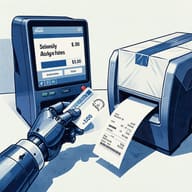
Mia: Agentcard is shipping what they call a Purchase API, their pitch being that a single API call lets an AI agent buy anything online. You tell the agent to buy product X from seller Y, and Agentcard locates the product, runs through checkout, and pays with a one-time card.
Milo: And it's live today on a real set of stores, not vaporware. They name DoorDash, Amazon, and most Shopify and Stripe-backed stores as working now, and you can try it from agentcard.sh with a first order free.
Mia: Ninjō AI is a Product Hunt launch describing backend infrastructure for AI sales agents, and it runs from Claude Code across Instagram, WhatsApp, and basically every channel where sellers sell. Per Lolo, a key member there, the company started about two years ago as a small agency building AI sales agents by hand for creators and coaches in Latin America, and it now runs over 45 clients and more than 150 agents in production handling millions of direct messages.
Milo: The whole operation got rebuilt on top of Claude Code under the name Cortex — one system holding every prompt template, KPI rubric, anti-pattern, and playbook learned from real conversations, and they use it to create, test, analyze, and improve agents. When the MCP standard arrived, they exposed all of that through an MCP server, so you can open Claude, Claude Code, Codex, or ChatGPT, ask for an agent for a client launch, and it ships connected to real DMs, verified and reversible.
Mia: Right — and those are self-reported production numbers from Lolo, but they're substantial: over 750,000 dollars in sales generated by Ninjō agents, 1.9 million conversations handled, and one agent that produced sixty-five thousand dollars in a single four-day launch across 839 conversations while recovering 47 declined payments one by one. They also report 202 sales calls booked in one month on a single mentor's Instagram.
Milo: Agnost AI is a Product Hunt listing aimed at catching agent failures your evals miss. It analyzes conversations between users and your production AI agents and looks for silent failures, behavior drift, hallucinations, user frustration, hidden feature requests, and churn signals.
Mia: The key move is that it groups those issues into recurring patterns rather than leaving them as isolated incidents, and it shows you the exact users and conversations behind each insight, then turns them into evals and fixes. So it's closing the loop from spotting a production problem to feeding it back into testing.
Mia: Flare just launched on Product Hunt as a graph-first IDE and interactive map for agentic coding. Its maker says he built it because chat transcripts from agents like Claude Code or Codex hide impact: hand an agent a task, come back to thirty changed files and a transcript, and that transcript never tells you one of those files is imported by nine others, or that a single untested change is holding the app together. So Flare reads the repository instead of the conversation, every file a node and every import an edge, with the map updating live as the agent edits.
Milo: Every write is attributed to whoever made it, so if two agents cross over the same file, the overlap shows up as a crossing on the map rather than a merge conflict later. Below the graph is a real terminal where you run claude, codex, or opencode, and the maker says Flare doesn't wrap, proxy, or touch your keys. Each change burst gets snapshotted into local history, so you can diff and revert one file or the whole tree without involving git, and every risky change draws a notification with a diff sub-graph of the last session. The task board is exposed over MCP, so the agent picks up work and asks questions there.
Mia: It runs entirely on your machine with no account, no telemetry, and no cloud, is MIT licensed, and is available as a desktop app or served to a browser from the machine the agent runs on. On GitHub the repo lists one hundred forty-eight stars, twenty-four forks, one issue, and one pull request.
Milo: Also on Product Hunt is session-indexer, an open-source command-line tool from GitHub user valpere under the Apache 2.0 license, for per-project semantic search over your own Claude Code session history. It indexes JSONL session transcripts into a local SQLite database inside the project's.claude directory, and retrieval runs on bge-m3 embeddings through Ollama with an automatic fallback to FTS5 BM25 keyword search, so Ollama is optional rather than a hard dependency. It also auto-injects relevant past context at session start.
Mia: The maker positions it as a companion to session-end: session-end gives you where you left off, while session-indexer answers what did we decide about that topic across past sessions by semantic similarity instead of grep. Both use the same Stop and SessionStart hooks, so they run together with no shared backend. Setup is go install with Go 1.26.6 or later, jq for hooks and recall formatting, and optionally Ollama with bge-m3, a multilingual model with one thousand twenty-four dimensions covering English and Ukrainian. The project reports seventy-five passing tests, though these are the maker's description rather than independently verified.
Milo: The stated scope is deliberately narrow: one developer on one machine indexing their own sessions in one project. It's not a team shared-history store or multi-user memory, so sharing findings with teammates is meant to happen through conversation, a pull request, or a document, not through the tool itself. The maker also contrasts it with centralized memory tools that hold that history elsewhere.
Mia: Today's single launch is Diet Claude, a free Chrome extension described as a usage meter for Claude. It appears as a soda can that drains as you use your session and refills when the limit resets. The maker says it shows how much of your session you've used, how much time is left, and when limits reset, meant to help optimize token use through context trimming, tightening prompts, and suggesting apt models. The launch post also says that when you run dry, it carries your conversation and context over to another large language model rather than starting from scratch.
Mia: Community posts credit Surbhi Singla as the maker, and these capabilities are all maker claims from the launch copy rather than independently verified. The community discussion adds attributed experience: one commenter said real-time rate-limit tracking is super useful so a workflow doesn't hit a wall mid-prompt, another who built their own local banner called that solution hit-and-miss and said they'd try Diet Claude, and a third said they've seen essentially this exact product a few times but found this name and branding the best and most memorable.
Milo: A couple of open questions remain. One commenter asked whether anything needs to be installed before use, and another asked whether Diet Claude can switch to a different Claude Code license as well, noting that switching AI providers can sometimes cause issues with understanding context, which could cause problems in some cases.
Mia: DockDuck is the one macOS launch on deck today. It's a file manager from solo developer Martin, who describes it as the native file manager the Finder should be, built entirely in Swift and AppKit with zero Electron.
Mia: He says Finder felt stuck, and every alternative he tried was either a powerful but dated power tool or an Electron app that ate RAM and battery just to list files. His claims for DockDuck: it opens instantly, renders folders, icons, and previews on the first frame, and scrolls through folders with thousands of files without stutter.
Milo: Those performance numbers are the maker's claims, not independent test results. But the feature list is substantial: tabs and multiple windows, grid, list, and column views, dual-pane browsing, a pinned Start dashboard with Recents, tags and color labels, instant search and saved Smart Folders, batch rename with patterns, a staging Shelf, folder sync and compare, ZIP, 7-Zip, TAR, and RAR archive handling, plus SFTP, SMB, WebDAV, and FTP connections. It can also be set as the default file manager, and the maker says files never leave the Mac and are never uploaded.
Milo: On the practical side, it needs macOS 14 Sonoma or later with a universal build for Apple Silicon and Intel. There's a free fourteen-day full Pro trial with no card required and a fourteen-day money-back guarantee. Pro Lifetime is forty-nine dollars once, while Pro Annual is twenty-four ninety-nine per year with manual renewal and no auto-charge. Code PRODUCTHUNT21 takes ten percent off any plan until September thirtieth.
Mia: And Martin calls this an early launch, saying he's building it in public.
Mia: The other launch is Memoria, a camera-roll search app positioned as search by text, speech, object, and faces, one hundred percent offline. Maker Anas says it uses on-device AI to transcribe video audio, read text in screenshots, and recognize faces and objects, so you can type a word spoken in a video or written on a receipt and the app finds the matching media. Everything runs locally, with no cloud processing, no account required, and no data leaving the phone.
Mia: He frames the problem as endless scrolling, saying he spent about ten minutes trying to find a specific meme, receipt, or video clip of a friend saying a particular word. His contrast: Apple Photos is limited when searching for text or audio, while Google Photos requires a monthly subscription and forces uploading personal media to the cloud.
Milo: Those privacy and capability claims are the maker's, not independently verified. For availability, Memoria is free to test on the first two hundred fifty media items, and the unlimited version is a one-time purchase, heavily discounted during the launch period, with no subscriptions.
Milo: The community discussion does raise real open questions though. One commenter asked how much storage the indexing data takes up, whether the app re-uploads photos and videos, and whether it can handle large libraries. A second commenter said the receipt example is exactly the kind of search Apple Photos fails at, called the fully on-device approach the harder engineering path, and asked where the offline model starts to struggle, such as with handwriting.
Mia: That's our look at Ninjō, an AI sales-army platform that grew from a two-year-old Latin American agency into more than 150 production agents — now built on Claude Code with versioning and rollback.
Milo: And there's more to come. Thanks for listening, and we'll catch you next time.