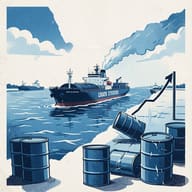
0811 | US Stocks Slip on Hormuz News; Nvidia Credit, Oil, CPI Looms
Show notes
Tuesday's tape was dominated by crosscurrents from the Strait of Hormuz, where conflicting reports on a US-Iran deal moved oil, equities, and bonds ahead of Wednesday's July CPI release. Credit markets took comfort as Nvidia narrowed its $500 billion AI financing plan, easing credit-risk measures. The episode also covers oil climbing above $83 a barrel on Iran's conditions, the high stakes around July CPI as record bond shorts meet multi-decade long-end yields, bitcoin miner Riot Platforms surgi
Timeline
- 00:00:00 Opening
- 00:00:37 Stocks Close Lower on Hormuz Deadlock Ahead of CPI
- 00:01:48 Nvidia Credit Risk Eases on Narrowed $500 Billion Plan
- 00:03:12 Oil Tops $83 as Iran Conditions Hormuz Reopening
- 00:04:31 July CPI Weighs on Record Bond Shorts and Long-End Yields
- 00:05:46 Riot Platforms Surges on $9 Billion Anthropic Compute Deal
- 00:06:52 Intel Upsizes Stock Offering to $20 Billion at $95
Related links
- US Stocks End Down as Hormuz Deadlock Sends Oil Up Ahead of CPI - Bloomberg Markets
- S&P 500 Hovers Near Record Highs on US-Iran Hopes - Bloomberg Markets
- Wall St set for higher open as investors weigh fresh US-Iran peace deal reports - Yahoo Finance
- Nvidia Credit Risk Eases After CEO Clarifies $500 Billion Plan - Bloomberg Markets
- Nvidia’s Show of Financial Force Soothes Jittery Credit Markets - Bloomberg Markets
- Nvidia Can’t Solve the Two Big AI Buildout Problems - Bloomberg Markets
- Wall Street just endorsed Jensen Huang's 'big concept' for AI. What now? - US Top News and Analysis
- Nvidia (NVDA) Is Going Beyond GPUs in the $500 Billion AI Boom, Wells Fargo Says - Yahoo Finance
- U.S. oil rises above $83 a barrel as Iran says Strait of Hormuz won't open until conditions are met - US Top News and Analysis
- Pakistan signals progress on U.S.-Iran deal as Washington and Tehran trade reparation demands - US Top News and Analysis
- A Dozen Ships Switch Oil Outside Hormuz as US Touts Transits - Bloomberg Markets
- Pakistan Says Deal Is Close Even as Iran, US Harden Stances - Bloomberg Markets
- An inflation report Wednesday should be a big deal for the Fed. Here's what to expect - US Top News and Analysis
- July CPI Crucial as Inflation Rebound Concerns Rise - Bloomberg Markets
- Trend-Chasing Funds’ Big Bond Short Raises Stakes for CPI - Bloomberg Markets
- Barclays Sees Picky Bond Buyers Keeping Yields at Multiyear Peak - Bloomberg Markets
- Fed Expected to Keep Raising Rates Until Inflation Cools - Bloomberg Markets
- Unpriced Food Inflation Threatens Volatile Bond Market - Bloomberg Markets
- Riot Platforms stock surges on $9.1 billion data center deal with Anthropic - Yahoo Finance
- Riot Platforms strikes deal with Anthropic as bitcoin miners shift focus to AI infrastructure - US Top News and Analysis
- Intel upsizes stock offering to $20 billion at $95 per share as AI demand accelerates - US Top News and Analysis
This episode is produced by Bri. Bri uses advanced AI technology to turn the feeds you care about into podcasts made for listening. Contact us at hi@bri.so.
Transcript
Mia: You're listening to After Market, from Bri. I'm Mia, and alongside me is Milo.
Milo: Hey everyone. Big session today. Stocks fell into Tuesday's close, with the drop tied to headlines around the Strait of Hormuz, even as oil climbed higher.
Mia: We've also got shifts in the credit market around Nvidia, and a sharp move higher in US oil above $83 a barrel.
Milo: And we'll look ahead to Wednesday's big inflation print for the Fed, plus a surge for bitcoin miner Riot Platforms on a reported Anthropic deal, and Intel's massive upsized stock offering.
Mia: Let's start with how US stocks closed Tuesday. The tape ended lower, and the decline was pinned on a crosscurrent out of the Strait of Hormuz. On one hand, Pakistan said a US-Iran deal to address the strait was close, even as negotiations between the two countries remain at an impasse. And on the other, oil prices pushed higher, ahead of CPI data.
Milo: Though here's where it gets confusing, because the same news flow carries an opposite account. One headline has stocks trading near all-time highs, with the S&P 500 hovering near record levels and bonds rising, as hopes for a deal to revive the strait actually trimmed a rally in oil.
Mia: So the reports conflict on both direction and timing. One has stocks down on the Hormuz deadlock with oil up, while the others have stocks firm near records and deal hopes capping oil's rally.
Milo: What's consistent is that the Hormuz headline flow is transmitting through oil, equities, and bonds, with the CPI print the stated catalyst coming next. So watch whether the deal reports harden or break down, how oil reacts, and of course Wednesday's inflation number.
Mia: A shift in the credit market around Nvidia was part of Tuesday's tape. Bond traders dialed back their measures of credit risk tied to the company, after Nvidia said it would limit its exposure in a five hundred billion dollar plan to finance the kind of AI investments driving demand for its chips.
Milo: And coverage frames this as a show of financial force that soothed jittery credit markets. Nvidia's commitments to backstop the AI boom had seemed to swell by the day, including a reported two hundred fifty billion dollars to help kickstart a massive data center for OpenAI in Ohio, the latest in a string of large financings Nvidia was involved with.
Mia: The reporting also notes that the first three-plus years of the AI build-out were funded by record amounts of equity and debt from leading tech companies, and that Nvidia has a new idea for what comes next. Wall Street has reportedly endorsed CEO Jensen Huang's big concept for AI, and a separate headline says Wells Fargo sees Nvidia going beyond GPUs in the AI boom.
Milo: Though there's real uncertainty here. Another headline argues Nvidia can't solve the two big AI buildout problems. So watch whether those credit risk measures keep easing as details of the financing plan get clarified, and whether any more Nvidia financing commitments emerge.
Mia: Now to oil, which rose as much as three percent earlier in the day and moved above eighty three dollars a barrel. That followed President Donald Trump demanding that Iran pay reparations to the US, and Iran saying the Strait of Hormuz won't open until conditions are met.
Milo: Then, in a separate development, Pakistan's defense minister said the US and Iran are close to some sort of arrangement over the strait, even after both sides appeared to toughen their positions in long-deadlocked negotiations. Washington and Tehran remain far apart even as both talked of winding down regional hostilities.
Mia: And Noam Raydan, a senior fellow at the Near East Institute, said the data shows the Strait of Hormuz and the Red Sea will remain essential choke points. Meanwhile, a dozen ships switched their oil operations outside Hormuz as the US touted transits.
Milo: So the uncertainty here is high, because the sources conflict. One signals progress toward an arrangement, while another stresses the two sides remain far apart. Watch whether that reported deal progress turns into concrete terms, any confirmation of the reparation demand, and whether the oil spike holds if those shipping diversions outside Hormuz keep up.
Mia: Wednesday's inflation report should be a big deal for the Fed. The consumer price index for July is expected to show only a modest increase, but the stakes around the release are unusually high right now.
Milo: That's because trend-chasing investors are holding record short bets against global bonds, which lifts the stakes for US inflation reports this week. And the market backdrop is already at an extreme. Barclays says a shift in the US Treasury buyer base toward value-oriented mutual funds, households, and other private investors has helped push thirty year yields to multi-decade peaks, and the bank sees picky bond buyers keeping yields at that multiyear high.
Mia: So the July CPI print is what the Fed will be weighing against concerns about inflation rebounding. The same coverage flags July CPI as crucial as those rebound worries rise, warns that unpriced food inflation threatens a volatile bond market, and notes the Fed is expected to keep raising rates until inflation cools.
Milo: Watch Wednesday's release and the immediate reaction in Treasury yields, especially at the long end, alongside what happens with those crowded bond short positions. Though the direction and magnitude of any market move aren't specified in what we have.
Mia: Riot Platforms, the bitcoin miner, saw its stock surge on a reported long-term compute deal with Anthropic. One headline puts it at a nine point one billion dollar data center deal with Anthropic, and separate reporting places the transaction at around nine billion dollars over twenty years.
Milo: That coverage describes it as a compute deal, and frames the agreement as part of bitcoin miners shifting their focus to AI infrastructure. The move direction is reported only as a surge, with no magnitude or share price supplied.
Mia: There's also some material uncertainty on the terms. The deal size comes in at both nine billion and nine point one billion depending on the report, and it's alternately described as a compute deal and a data center deal. Beyond the reported twenty year horizon, no other terms are given.
Milo: So watch for further Riot Platforms disclosure on the value and structure of the Anthropic agreement, and more evidence on how the broader wave of bitcoin miners is moving into AI infrastructure.
Mia: And Intel upsized its stock offering to twenty billion dollars, priced at ninety five dollars a share, citing accelerating AI demand. The capital raise comes as technology giants have spent trillions on AI demand and the infrastructure buildout that supports it, which is the context Intel places the offering in.
Milo: But the reporting only gives us the offering terms and the AI-demand rationale. It doesn't say whether the offering is fully subscribed, how the capital will be deployed, or how investors have received the upsizing. There's no word on a same-session share price move or any after-hours reaction either.
Mia: So keep an eye on the completion and pricing of the offering, any statements on how the proceeds will be used, and the subsequent trading reaction in Intel shares, as the AI infrastructure spending narrative continues to drive capital-raising among large technology firms.
Mia: That's a wrap for today's markets. We'll be watching that CPI print and how the long end of the Treasury curve responds.
Milo: And of course, how the Hormuz headlines evolve, and whether those reported deals in AI really firm up. Thanks for listening to After Market.